
To treat your hearing loss is a big step in your health care. It is an indication of a transition between isolation and frustration to reconnection and clarity. Nevertheless, the first days with new devices might be unexpected in many cases of first-time users. Hearing aids take time to adjust to the neurological system unlike when a person puts on a pair of glasses and sees well instantly. It means that, knowing what to expect when making this transition, could make a difference between success and quitting too early.
The “New” Sound of the World
The initial thing that most users will be attracted to is how shouty the world really is. With untreated hearing loss, your brain gradually forgets the background noises of everyday life, the hum of the refrigerator, the rustling of the leaves or even your very footsteps. These sounds come back together immediately you first wear your devices.
This onslaught of sound information may be overwhelming or acute at first. It is not a defect but it means that your brain is becoming conscious. The quality audiology hearing aids are set to reintroduce these frequencies and it takes time to retrain your brain on how to filter them out. The initial few weeks are characterized by your personal voice not sounding like it normally would as though you are talking into a barrel. This is referred to as the occlusion effect and your brain will tend to adapt with it in the near future as you wear the gadgets regularly.
The Process of the Adjustment Period
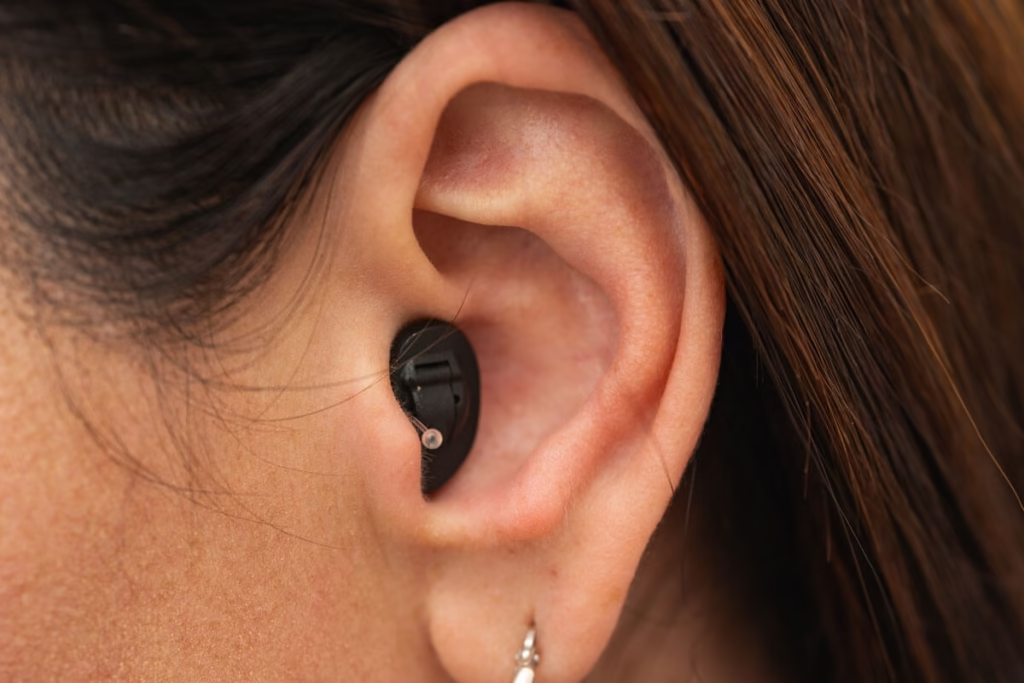
The process of adaptation does not occur overnight. To facilitate a full-time wear, Audiologists will advise the wearing of the device on a wear schedule. You may begin by putting on your devices in silent places like your living room, and advance to noisy places such as restaurants or streets.
You will also get to know the physical routine of maintenance at this time. The placement of the devices, change of batteries or charging them during the night, and washing the wax covers will be second nature soon. It is important to keep in touch with your provider at these initial weeks. The devices today are so customizable and with feedback on what you are getting to experience, then your audiologist can tweak the programming to create a more comfortable and clear speech experience.
Reclaiming Sanity and Support

As soon as the initial shock of being exposed to new sounds is over, the benefits start glowing. It is likely that you will find yourself not being tired of social interactions. The mental effort spent in attempting to guess the words, the so-called cognitive load, is eliminated, and you have more time to enjoy the conversation.
You will also begin to perceive the shades, which you were unable to identify: the punch of a joke, the tune of music, or the murmuring consonants of speech that bring words their meaning. Although the machines will not fix your hearing to the point where you have perfect hearing, they will give you a new normal which is infinitely better than the muffled world you have left.
Conclusion
The quest towards hearing well is a long process and not a race. You prepare yourself to be successful in the long term by anticipating a transition period and dedicating yourself to it. The relearning to hear are minor sacrifices to the renewed confidence, safety and connection that accrue with an effective treatment. Relax into it, and wait as you get the pleasant soundtrack of life coming back to you.