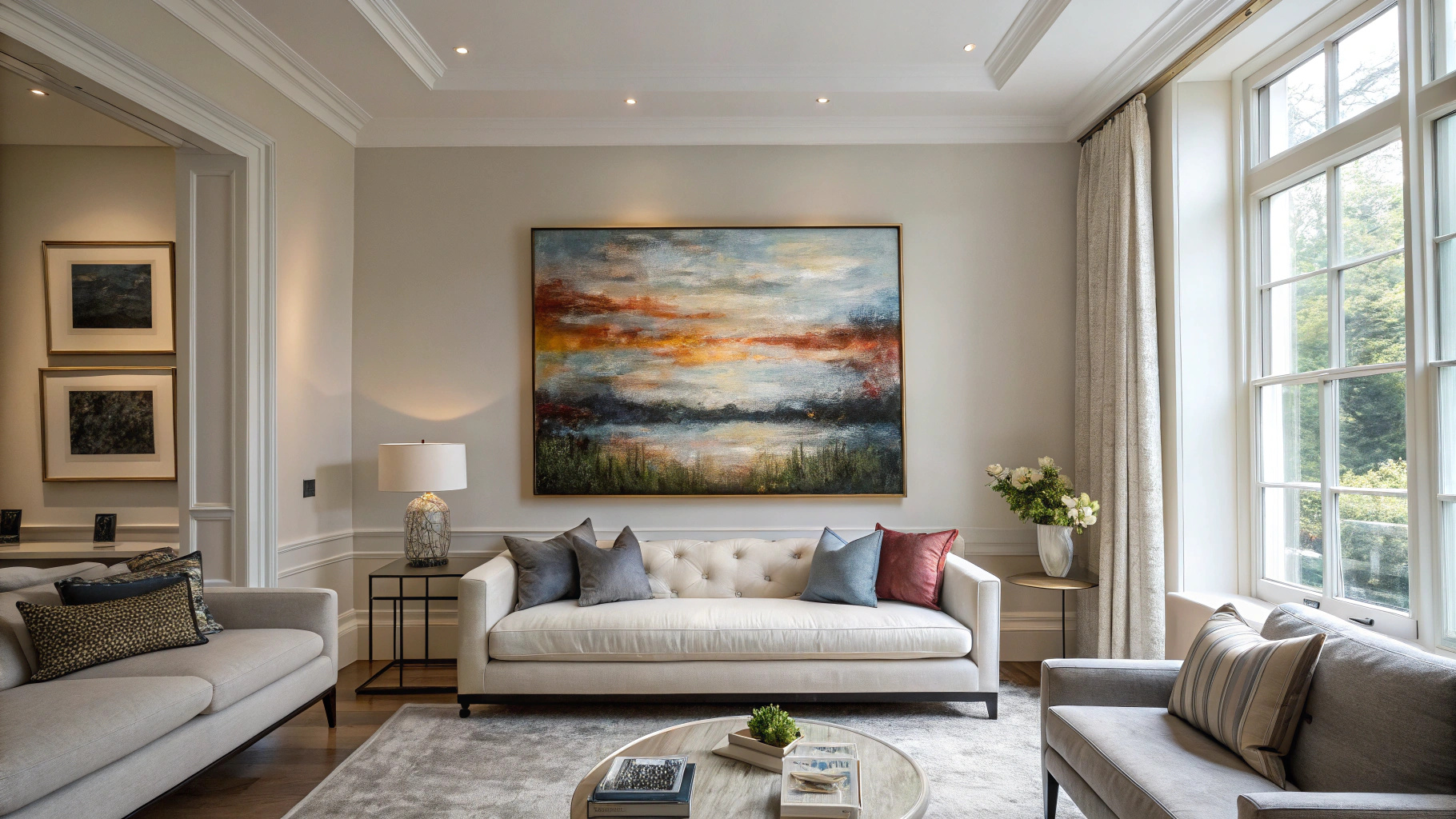
Hanging artwork is one of the simplest and most effective ways to elevate interior design. The right placement makes a room feel intentional, cohesive, and visually engaging. Yet many homeowners struggle with where, how high, and how to arrange art so it complements the space rather than feels awkward or disconnected.
This guide breaks down the essential principles for hanging art—from singular pieces on blank walls to dynamic groupings and alternative display ideas.
Establishing the Ideal Height
A consistent baseline helps maintain visual harmony throughout a home. In most living spaces, aim for the center of the artwork to sit at approximately 60 inches (152 cm) from the floor. This aligns with the average eye level and creates a natural line that the eye can follow as you move through the room.
This rule provides a reliable starting point, whether you’re hanging a single statement piece or arranging sequences of frames. It keeps art accessible and connected to human scale without feeling too high or too low.
Hanging Art Above Furniture
Artwork doesn’t exist in isolation – how it relates to furniture is crucial. When positioning art above a sofa, console, bed, or similar element, focus on proportion and spacing.
- Width guideline: Choose pieces or arrangements that span roughly two-thirds the width of the furniture beneath. This grounds the artwork visually and prevents it from feeling too small or floating.
- Vertical spacing: Position the bottom edge of the frame 4–6 inches above the top of the furniture. This distance keeps the composition connected without crowding the area.
For wider compositions or long walls, horizontal configurations such as a triptych or a sequence of paired pieces often work best. The scale of the artwork should respond to the scale of the room and the furniture, maintaining balance and cohesion.
Gallery Walls and Groupings
Groupings can be striking when executed with intention. The key is to think of the collection as a single visual unit rather than separate frames competing for attention.
- Plan first: Lay out all pieces on the floor or sketch the arrangement. This helps you judge spacing and alignment before committing to wall holes.
- Keep spacing consistent: Maintain 2–3 inches (5–8 cm) between frames for a unified look. Too much distance disperses the group; too little can feel cluttered.
- Center the entire grouping: Position the center of the full arrangement around 60 inches from the floor for a natural, eye-level presentation.
Groupings allow creative combinations – abstract works, sketches, and photography can live together when balanced by consistent spacing and thoughtful placement. If you prefer contemporary abstract displays, exploring curated options like those at https://tryartwork.com/abstract can help you find pieces that look cohesive together and bring refined artistic depth to a gallery wall.
Styling Beyond Hanging
Hanging isn’t the only way to display art. Flexible styling can add layers and personality, especially in spaces where you want a relaxed, collected feel.
- Lean a framed piece against the wall on a console, mantel, or shelf to create an informal yet styled look with added depth.
- Combine leaned artwork with smaller hung pieces nearby to create asymmetry that still feels intentional.
- Place framed works among books, ceramics, and plants to integrate art into everyday spaces like shelves or kitchen vignettes.
Treat artwork not just as wall decor, but as a decorative object that can move throughout the home. This approach keeps interiors dynamic and prevents walls from feeling static.
Final Principles for Successful Placement
To ensure your artwork enhances the space, use these core principles as a checklist:
- Use a consistent reference height (center ~60 inches) for cohesion room to room.
- Respect scale: larger walls and furniture call for larger pieces or intentional multi-piece arrangements.
- Plan spacing and grouping before installation to avoid uneven layouts.
- Integrate art with furniture relationships so the room feels visually grounded.
- Experiment with leaning and layered styling for a more relaxed, lived-in look.
With these guidelines, hanging art becomes less guesswork and more a practical design step that strengthens the entire space. Whether you’re refreshing a blank wall or building a curated gallery display, the result should feel personal, balanced, and visually intentional.