Imagine this scenario. You’re driving home after a long day, and then, out of nowhere, another car clips you and takes off before you even realize what just happened. You’re left staring at the road, wondering, Did that really just happen? Sadly, hit-and-runs are a regular thing in Florida. And when it happens to you, the shock hits just as hard as the crash itself.
Step One: Check yourself first
Before anything else, make sure you’re okay. That’s priority number one. Even if you think you’re fine, just pause for a moment. Take a breath. Sometimes injuries don’t show up right away. You might feel sore later or notice something off once the adrenaline wears off.
If you or anyone else is hurt, call 911. Let them know it was a hit-and-run so they can send both medical help and law enforcement. Do not try to tough it out or just go home thinking it’s probably fine.
Step Two: Try to catch anything about that car
You probably only saw it for a few seconds, but anything helps. The color, shape, type of car, part of the license plate, or even a bumper sticker can matter. If you can, jot it down or take a quick voice note on your phone before you forget.
And if anyone nearby saw it happen, ask them to stick around for the police or at least give you their contact info. Witnesses can help fill in the gaps later.
Step Three: Do not chase them
This is where most people’s instincts kick in. You feel angry and want to go after the driver. It’s a normal reaction, but do not do it because it’s not worth the risk. You could end up in another crash or in a confrontation you don’t want. Stay where you are, call 911, and let the officers handle the rest.
Step Four: Call the police and report it
Florida law requires you to report a crash if there’s injury, death, or property damage over $500, which a hit-and-run almost always involves. So get law enforcement there and make it official.
The police report will be a big deal later. It proves you didn’t cause this and that you did your part to report it. Without that, insurance companies can make things messy.
If the crash happened while your car was parked and you didn’t see it until later, report it. Go to the nearest police station or call the non-emergency number.
Step Five: Get photos, videos, and anything you can
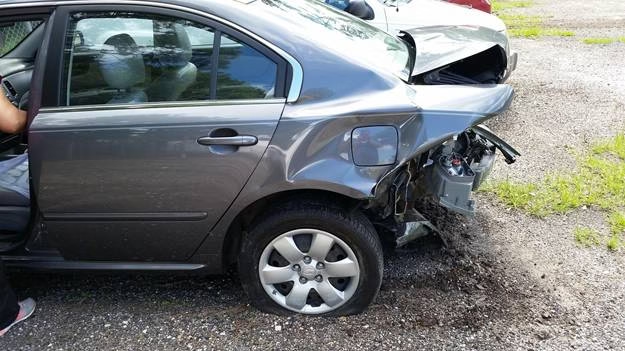
If you can safely do it, take pictures. Your car, the road, debris, skid marks, a broken mirror, or anything that shows what happened. Try to capture where you were and what direction the other car went.
If the crash was near a business or a house, look for security cameras. You don’t even have to get the footage yourself. Just note the address and tell the officers. Sometimes that’s how they catch the driver later.
Step Six: Tell your insurance company
Florida is a no-fault state. That means your insurance will handle your medical bills up to your policy limits through your Personal Injury Protection (PIP). You don’t have to wait for the other driver to be found to start getting medical care.
When you talk to your insurer, keep it short and factual. Just say what happened and that the other driver left the scene. Don’t guess or fill in blanks. They’ll ask for the police report later, and that will back up your story.
If you have Uninsured Motorist (UM) coverage, that’s going to be a lifesaver. It kicks in when the other driver can’t be identified or doesn’t have insurance. It can help cover things that PIP doesn’t, like pain and suffering or lost income.
Step Seven: If you don’t have UM coverage
It’s not the end of the world, but it does make things trickier. Your collision coverage might help pay for your car repairs, though you’ll likely have to pay your deductible first.
If the police eventually find the hit-and-run driver, you can go after their insurance for damages. And if they don’t have insurance, your lawyer can help you file a lawsuit directly against them. Sometimes, people are caught weeks or months later because of camera footage, witnesses, or car part debris left behind.
Step Eight: Know what the law says about hit-and-runs
Florida takes hit-and-runs seriously. Leaving the scene of an accident can lead to jail time and huge fines.
- If there’s only property damage, it’s a misdemeanor that can mean up to 60 days in jail and a $500 fine.
- If someone is hurt, it becomes a felony with up to five years in prison and a $5,000 fine.
- If someone dies, it’s a first-degree felony, and the driver could be facing up to 30 years behind bars.
So yes, it’s a big deal. Law enforcement treats it that way, and you should too.
Step Nine: Hire a Florida car accident attorney
You might think, “Why do I need a lawyer if the other driver ran off?” However, dealing with your own insurance after a hit-and-run can be challenging. You’d think they’d make it easy since you’re the injured victim, but it doesn’t always work like that.
An experienced Sarasota car accident lawyer can handle all communication with the insurance company, make sure your bills are paid properly, and help you get the full compensation you’re entitled to. They also know how to dig into police reports, check for surveillance footage, and push for updates on the investigation.
If the other driver gets caught, your lawyer can take over from there and make sure they’re held accountable for maximum damages.
You Deserve Compensation for Your Hit-and-Run Car Crash
If you are injured in a hit-and-run accident, you can’t control what that other driver did, but you can absolutely control what you do next. Stay calm, keep track of every detail, and work with a seasoned car accident attorney in Sarasota. Your attorney will explore every possible legal avenue to help you recover what you’ve lost and move forward.