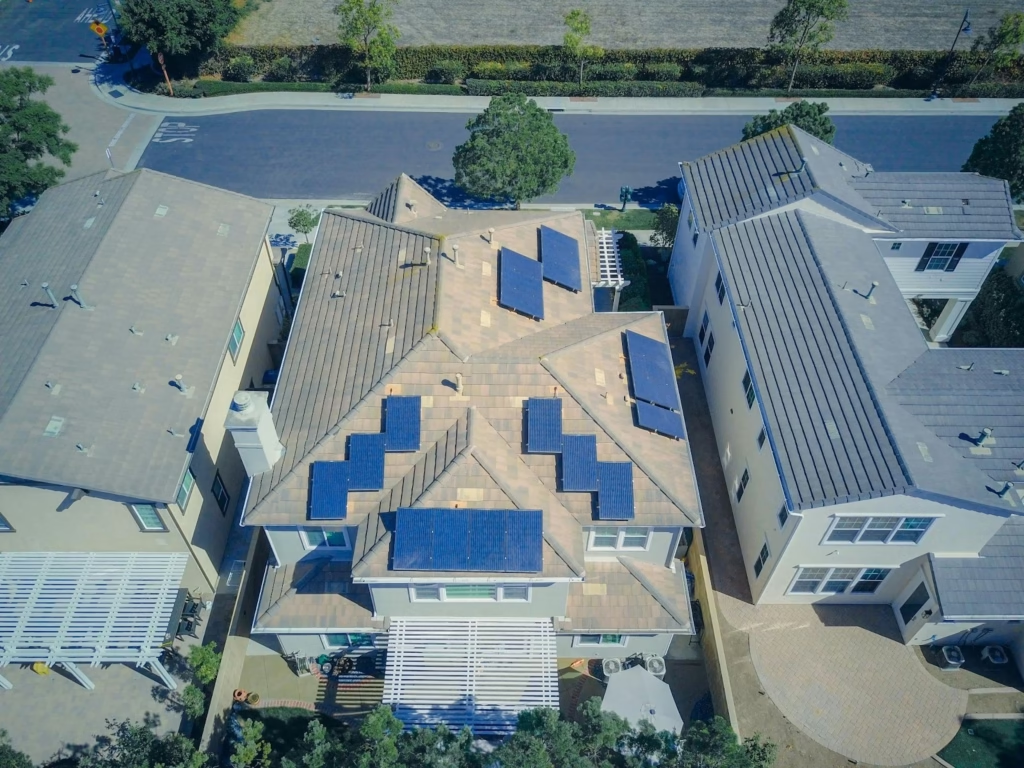
Thinking about installing solar panels, but not sure where to start? Navigating some of the costs and practicalities can be confusing. Below are a few tips that can help you when doing your research so that you can make the switch smoothly.
- Check if your home is a good fit
Solar panels aren’t a practical choice for every home. You need to consider roof space, roof pitching and nearby sources of shade. A south-facing roof is typically the best place to put solar panels for maximizing sunlight (in the Northern hemisphere) – check that you have space on this roof and that there aren’t any trees or taller buildings casting a shadow over your home.
- Understand your energy usage
Before getting quotes, grab a few recent energy bills and check how much electricity you use on an average day per year. This helps installers to identify the best suited system size to fit your needs. If you’re planning on adding other features in the near future too such as a heat pump or an EV charger, mention this too – your solar system can be sized with those upgrades in mind.
- Decide if you want a battery
Solar panels are only able to generate electricity during daylight hours. What will happen if you need electricity at night? This is where solar battery storage comes in use. A battery allows you to store excess energy produced during the day for use in the evenings. It’s necessary if you want to go off-grid and still want power after dark. Of course, installing this battery is an additional cost to budget for.
- Shop around for quotes
Never go with the first installer you speak to. Ask for at least three quotes, and make sure you are referencing the same system size each time, and ideally the same panel and inverter brands – this will allow you to truly understand the difference in labor cost between each installer. Make sure to also compare warranties and see if companies will provide a free inspection.
- Explore financial assistance solutions
Most homeowners cannot pay the whole cost of installation upfront and so spread out the cost using payment plans or finance options. When comparing these funding solutions, consider interest rates, monthly payments and term lengths. It’s worth also looking into solar grants and tax credits – these may help reduce some of the overall costs.
- Make sure its practical long-term
Solar panels could take many years to pay off before you truly start seeing the financial benefit of them. Of course, how long they take to pay off depends on how many you install. If you’re on a tight budget, consider whether it’s better to install one or two panels rather than trying to splash out on a large expensive system. You’ll still see energy savings and you’ll pay off the cost of the panels earlier without having to pay large monthly installments. It’s also worth noting that installing even one or two panels will likely boost your property’s value – so even if you plan to sell your home in the near future, it could still be worthwhile.
- Choose a reputable installation company
Finally, make sure that you are choosing an installer who has positive reviews or who is recommended by friends and neighbors. You don’t want to end up with poorly fitted panels that don’t generate enough electricity or cause damage to your roof – by choosing an honest installer, you can make sure that panels are installed properly.