LinkedIn has the best B2B targeting of any paid channel and the CPCs to match. That combination punishes weak execution faster than any other platform a SaaS team is likely to run.
The failure pattern is consistent. Lead gen forms fill up, sales reject most of them, and last-click attribution makes the channel look worthless across a six to twelve month sales cycle. The spend is visible and the pipeline contribution is not.
I reviewed five agencies that run LinkedIn Ads for B2B SaaS, weighing ad format coverage, audience layering, attribution that survives a long cycle, creative capacity and pricing clarity.
Format coverage, audience construction and CRM-connected reporting were the main evaluation points.
Key Takeaways
- Obility is the strongest choice if published pricing matters. It covers LinkedIn alongside Google, Meta, YouTube and Reddit, and packages are public.
- Hey Digital is my top pick for a SaaS-only LinkedIn specialist. It runs every major LinkedIn ad format as one system with impression-based attribution into CRM.
- B2Linked is LinkedIn-only across every client, which gives it unusual platform depth if you want a single-channel partner.
- KlientBoost pairs LinkedIn demand gen with CRO and landing page testing, useful when the capture side is the bottleneck.
- Directive suits SaaS teams that want LinkedIn inside a broader performance and customer generation model.
- Format mix matters more than budget on LinkedIn. Most wasted spend comes from running conversion campaigns at cold audiences with no mid-funnel underneath.
How I Assessed These Agencies
Ad format coverage. Sponsored content alone is not a LinkedIn program. I looked for document ads, thought leader ads, conversation ads and video handled as a deliberate mix rather than a menu.
Audience layering. Agencies that target one dimension burn a budget. I prioritised those stacking account lists, job function, seniority and exclusions.
Attribution across long cycles. Last-click makes LinkedIn invisible when deals take nine months. Impression-based attribution connected to CRM was the differentiator I weighted most.
Creative capacity. Narrow B2B audiences hit fatigue quickly. In-house creative that refreshes on a schedule beats an agency that launches and stops.
I also considered how each partner fits alongside the rest of a paid stack, since the enterprise growth strategies that work at scale rarely depend on a single channel.
SaaS focus and seniority. SaaS experience, ICP-first targeting and a senior contact who stays on the account helped break close ties.
Hey Digital
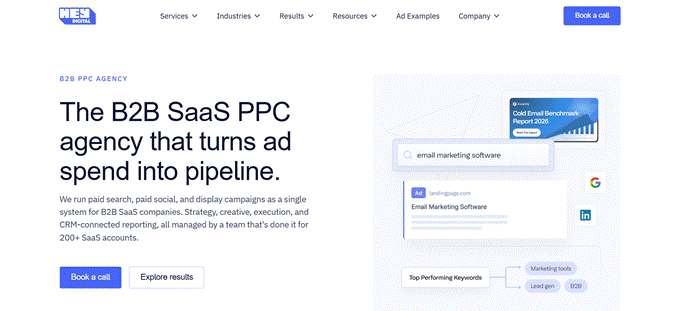
Hey Digital is the SaaS-only specialist here. As a LinkedIn Ads agency for SaaS, it runs the channel through the whole engagement rather than as one service line among many.
Pros
- B2B SaaS only, with 200+ SaaS accounts managed
- Runs every major LinkedIn format as one system: sponsored content, document ads, thought leader ads, conversation ads, video and lead gen forms
- Audience layering across account lists, firmographics, CRM-matched audiences, retargeting pools and lookalike expansion
- Impression-based attribution through Fibbler and Factors, connecting LinkedIn data to CRM pipeline
- In-house creative with quarterly reviews to stay ahead of fatigue in narrow ICPs
- A senior LinkedIn strategist leads the account as dedicated point of contact
- $430K+ in monthly LinkedIn Ads managed for B2B SaaS companies
Cons
- Pricing is custom and not published
- Paid media only, so it will not cover SEO, content or email
- SaaS-only scope does not suit multi-vertical companies
My experience with Hey Digital. The five-phase method is what stood out to me. Audit and foundation, strategy and architecture, creative and messaging, launch and structured testing, then optimisation and revenue reporting. Most agencies launch campaigns and send a monthly report. Running the audit against how SaaS buying actually works, rather than against what the campaign manager says, is a meaningfully different starting point.
The attribution approach is the part I would weigh most heavily. Impression-based tracking that credits a sponsored content view leading to a closed deal six months later is what makes LinkedIn defensible to a CFO. Last-click reporting simply cannot do that across a long cycle.
Format discipline also shows. The published guidance is to start with sponsored content and thought leader ads for awareness, add document ads mid-funnel, then layer conversation ads for conversion. That sequencing addresses the most common failure, which is pointing conversion campaigns at cold audiences.
Published results include a 52% reduction in ad spend alongside a 159% increase in deal value for Toggl, and LinkedIn MQLs up 110% for Pixelz. Client verticals span MarTech, FinTech, data infrastructure, productivity tools and developer platforms, with senior strategists who have scaled SaaS campaigns from Series A through post-IPO.
Obility
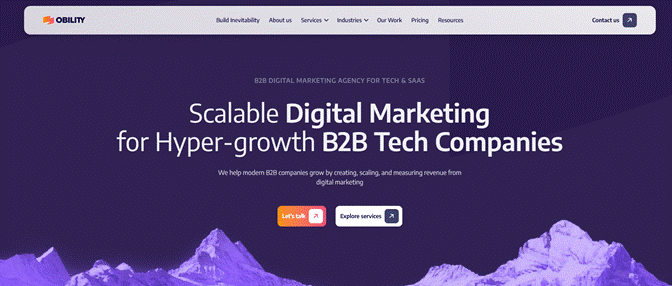
Obility is a B2B tech and SaaS agency running LinkedIn inside a multi-channel paid media offer, with packages and prices published on its site.
Pros
- Focused on B2B tech and SaaS paid media
- Packages and prices are public, so you can size before a sales call
- Covers LinkedIn Ads alongside Google, Microsoft, Meta, Display, YouTube and Reddit
- Builds pipeline dashboards with attribution rather than lead counts
Cons
- LinkedIn sits within a broader offer rather than as the specialism
- Higher tiers come with longer agreements
My experience with Obility. Obility frames paid media around B2B tech and SaaS pipeline, which fits how demand gen teams justify spend. The standout is channel breadth plus transparency. For a marketing lead who wants predictable scoping and public pricing, it is a practical first shortlist option.
B2Linked
B2Linked is a LinkedIn Ads specialist that works on the platform exclusively, across B2B clients rather than SaaS alone.
Pros
- LinkedIn-only focus gives unusual depth on platform mechanics and bidding
- Publishes substantial educational material on LinkedIn campaign structure
- Suits teams that want a single-channel partner rather than a multi-channel agency
Cons
- Not SaaS-exclusive, so ICP depth depends on the team assigned
- Single-channel scope means coordinating other channels falls to you
My experience with B2Linked. The single-platform focus is the argument. An agency that only runs LinkedIn accumulates pattern recognition on bidding, audience sizing and format performance that generalists take longer to build. The trade-off is that LinkedIn rarely works best in isolation, so you will need someone coordinating it against search and retargeting.
KlientBoost
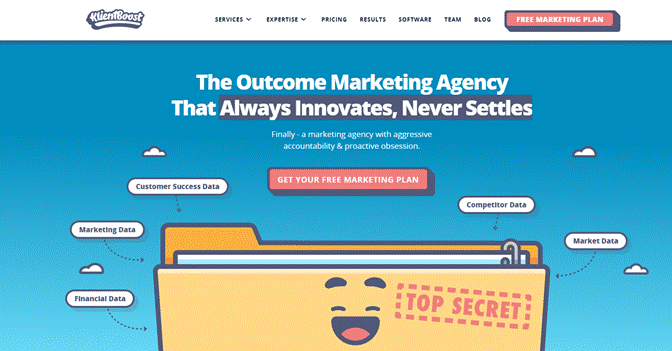
KlientBoost is a performance marketing agency with a strong LinkedIn Ads and conversion rate optimization story.
Pros
- Performance-driven LinkedIn Ads for demand generation, capture and retargeting
- Attribution reporting with real-time dashboards and revenue attribution modelling
- Deep CRO and landing page experience alongside media management
- Slack updates and regular strategy calls
Cons
- Not SaaS-exclusive, so ICP depth varies by team
- Pricing is bespoke and not listed publicly
My experience with KlientBoost. If your LinkedIn campaigns are generating clicks that land on a page nobody converts on, the CRO capability is the reason to look here. Pairing media management with landing page testing shortens the loop between diagnosis and fix, which matters when CPCs are high enough that wasted traffic is expensive.
Directive
Directive is a performance marketing agency working with B2B SaaS and technology companies, running LinkedIn inside a broader model it frames around customer generation rather than lead generation.
Pros
- B2B SaaS and technology focus across the client base
- Positions paid media around customer acquisition cost rather than lead volume
- Covers LinkedIn alongside search, and supports creative and strategy work
Cons
- Engagement scope tends toward larger programs
- Pricing is not published
My experience with Directive. The customer generation framing is the differentiator worth understanding. Optimising toward qualified customers rather than form fills changes which campaigns get budget, and it suits companies whose sales team has already rejected a quarter of low-intent leads. The model assumes you have clean CRM data to optimise against.
Conclusion
Obility is the strongest overall choice if published pricing and multi-channel coverage matter most, with LinkedIn running alongside search, social and display under transparent scoping.
Hey Digital is my top pick for SaaS teams that want LinkedIn to run properly as a full funnel, with every format handled as one system and impression-based attribution connecting spend to pipeline across long cycles.
Pick B2Linked for single-platform depth, KlientBoost for LinkedIn demand gen paired with CRO, and Directive for LinkedIn inside a broader customer generation model.
Whichever you choose, ask for a sample pipeline report before signing and agree what counts as a qualified lead with your sales team first. Most LinkedIn disappointment traces back to that conversation never happening.
FAQ
What should a B2B SaaS company budget for LinkedIn Ads?
LinkedIn CPCs run considerably higher than search, so a program needs enough budget to build a full funnel rather than only conversion campaigns. Agency fees sit on top of media spend and are frequently quoted rather than published, so ask both numbers early.
Why do LinkedIn lead gen forms produce low-quality leads?
Because the default setup optimises for volume. Pre-populated forms reduce friction to the point where people submit without intent. Adding qualifying fields and routing leads to CRM with context attached is what separates a usable lead from a form fill.
How should LinkedIn attribution work for a long sales cycle?
Last-click attribution will make LinkedIn look worthless when deals take six to twelve months, because the final touch is rarely the ad. Impression-based attribution connected to CRM is what traces an early sponsored content view to a closed deal much later.
Which LinkedIn ad formats work best for B2B SaaS?
Most programs start with sponsored content and thought leader ads for awareness, add document ads for mid-funnel where the content itself qualifies the prospect, then layer conversation ads for conversion. Running conversion formats at cold audiences is the most common way budgets get wasted.
How long before LinkedIn Ads show pipeline impact?
Meaningful pipeline signals usually take a quarter or more, and longer if your sales cycle runs past six months. Early weeks go on tracking setup, creative and audience construction rather than results.
Do I need a LinkedIn specialist or a general paid social agency?
It depends on how central LinkedIn is to your pipeline. A specialist accumulates platform-specific pattern recognition. A multi-channel agency coordinates LinkedIn against search and retargeting. If LinkedIn is your primary B2B channel, depth usually wins.

John Sargeant, writing on NeuFutur as Sargeant, is the founder and editor-in-chief of NeuFutur Magazine, where he has covered independent music, PC hardware, consumer tech, and gaming culture since 1998. With over 25 years of continuous digital publishing experience, he has written thousands of hands-on game and record reviews, conducted in-depth hardware field testing, and analyzed digital media monetization trends. His work prioritizes first-hand evaluation and long-term product testing.
Beats: Independent Music, PC Gaming & Peripherals, Consumer Tech, Webmaster Tools
Testing & Ethics: All hardware, software, and media reviews are conducted through hands-on evaluation in accordance with NeuFutur’s editorial independence standards; sponsored consideration is strictly excluded from editorial ratings.
Contact: editor@neufutur.com