Austin has built its reputation on live music, innovative cuisine, and a fiercely independent spirit. Less discussed but equally embedded in the city’s cultural fabric is its adult entertainment industry—a collection of gentlemen’s clubs that have evolved alongside Austin’s transformation from quirky college town to major metropolitan hub. These venues occupy a distinct space in the city’s nightlife economy, drawing both residents and visitors seeking late-night entertainment beyond the typical bar or music venue.
Understanding Austin’s strip club landscape requires looking beyond surface-level entertainment value. These establishments represent significant economic actors, employ hundreds of workers, and operate within a complex regulatory framework that reflects broader tensions between Austin’s progressive reputation and Texas’s conservative legal traditions.
How Austin’s Adult Entertainment Industry Evolved
The trajectory of strip clubs in Austin mirrors the city’s broader cultural shifts over the past four decades. What began as a handful of modest venues catering primarily to local clientele has expanded into a sophisticated entertainment sector that generates millions in annual revenue.
During the 1980s and 1990s, Austin’s gentlemen’s clubs operated in relative obscurity, occupying industrial areas far from the downtown core. As the city’s population swelled and its economy diversified beyond government and education, these venues gradually moved toward more visible locations and adopted upscale business models. The transformation reflected changing social attitudes and the normalization of adult entertainment as a legitimate—if still controversial—component of urban nightlife.
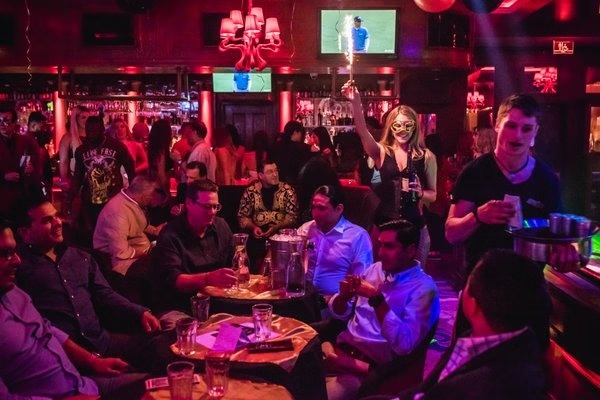
Today’s Austin strip clubs bear little resemblance to their predecessors. Many feature restaurant-quality kitchens, premium bottle service, and production values that rival mainstream entertainment venues. This evolution has occurred alongside Austin’s emergence as a destination city, with adult entertainment venues now factoring into tourism marketing and bachelor party itineraries.
Notable Venues in Austin’s Gentlemen’s Club Circuit
Austin’s adult entertainment landscape includes several established venues, each cultivating distinct atmospheres and clientele. The competitive market has pushed clubs toward specialization and quality improvements:
- The Yellow Rose: Operating since 1984, this North Austin institution has maintained its position through consistent performer quality and a sprawling layout that accommodates large groups. The venue’s longevity speaks to its ability to adapt to changing market conditions while maintaining core appeal.
- Palazio Gentlemen’s Club: Positioned in the upscale segment, Palazio emphasizes refined aesthetics and premium service standards. The club targets professionals and visitors seeking elevated experiences beyond standard strip club offerings.
- Exposé: This downtown-adjacent venue has built its reputation on performer diversity and attentive service. Its central location makes it accessible to both tourists and locals, contributing to consistently strong attendance.
- Rick’s Cabaret: Part of a national chain, Rick’s brings corporate polish and standardized operations to Austin’s market. The venue offers predictable quality and amenities that appeal to business travelers and groups unfamiliar with local options.
These establishments compete not just with each other but with Austin’s broader entertainment ecosystem—live music venues, bars, and restaurants all vying for discretionary spending. Success requires differentiation beyond the core product, whether through location, ambiance, or ancillary services.
Economic Impact and Regulatory Framework
Strip clubs occupy an ambiguous position in urban economic development discussions. While rarely featured in chamber of commerce materials, these venues generate substantial economic activity through multiple channels:
- Direct employment for performers, security staff, bartenders, kitchen workers, and management teams
- Indirect support for transportation services, particularly ride-sharing platforms during late-night hours
- Tax revenue through sales taxes, property taxes, and various licensing fees
- Tourism dollars from visitors who include adult entertainment in their Austin itineraries
Research on the broader economic effects of adult entertainment venues has produced nuanced findings. Research in Justice Quarterly examining crime patterns around adult entertainment venues found no significant increases in violent crime, contradicting frequent claims by opponents of such establishments.
The regulatory environment governing Austin’s strip clubs reflects Texas’s complicated relationship with adult entertainment. State law prohibits full nudity in venues that serve alcohol, creating the “bikini bar” model that dominates the market.
Local ordinances add additional layers of regulation. Austin’s municipal code addresses zoning restrictions, operating hours, and licensing requirements. These rules have evolved through decades of negotiation between club owners, neighborhood groups, and city officials—a process that continues as Austin’s growth brings residential development closer to existing adult entertainment districts.
Selecting a Venue: Practical Considerations
Choosing among Austin’s gentlemen’s clubs depends on multiple factors beyond simple proximity. First-time visitors and regulars alike benefit from considering several dimensions:
- Location and accessibility: Downtown venues offer walkability and integration with broader nightlife plans, while suburban locations typically provide easier parking and less crowded environments.
- Crowd composition: Some venues attract predominantly younger crowds, while others cater to older professionals. Weekend versus weekday attendance patterns also vary significantly.
- Pricing structure: Cover charges, drink minimums, and tipping expectations differ substantially across venues. Premium clubs may charge $20-30 covers with elevated drink prices, while neighborhood spots often have minimal entry fees.
- Performer schedules: Clubs typically feature different performer lineups on different nights, with weekends drawing larger rosters and more experienced dancers.
- Amenities: Food quality, seating options, and VIP areas vary widely. Some venues function primarily as nightclubs with adult entertainment, while others focus exclusively on stage performances.
Online reviews provide useful intelligence, though they should be interpreted cautiously. Recent reviews matter more than historical ratings, as management changes and performer turnover can dramatically alter venue quality. Pay particular attention to comments about staff professionalism and pricing transparency—these factors significantly impact overall experience.
Regional Context: Adult Entertainment Beyond Austin
While Austin offers a concentrated selection of gentlemen’s clubs, the broader Texas market provides additional options for those willing to travel. Each major city has developed its own adult entertainment culture shaped by local demographics and regulatory approaches.
San Antonio’s market, located 80 miles south, features venues that blend traditional strip club elements with the city’s tourism-oriented hospitality sector. The proximity to military installations influences crowd composition and business patterns.
Dallas, 200 miles north, hosts Texas’s largest concentration of adult entertainment venues. The market includes both high-end clubs in upscale neighborhoods and more traditional establishments in industrial areas. Dallas’s corporate economy supports premium venues with business expense account clientele.
Houston’s sprawling geography has produced a decentralized adult entertainment landscape with clusters in multiple areas. The city’s international population and port economy create diverse venue styles catering to varied cultural preferences.
Understanding these regional variations helps contextualize Austin’s position in the state’s adult entertainment ecosystem. Austin’s clubs generally emphasize aesthetic sophistication and service quality over the volume-oriented approaches more common in Houston or the corporate polish typical of Dallas venues.
The Appeal of Austin’s Adult Entertainment Scene
The persistence and growth of Austin’s gentlemen’s club industry reflects several converging factors. For visitors, these venues offer experiences unavailable in many other cities, particularly those with more restrictive regulations. The combination of Texas’s permissive alcohol laws and Austin’s entertainment infrastructure creates an environment where adult venues can operate as legitimate nightlife destinations rather than marginal establishments.
For locals, strip clubs serve various social functions beyond obvious entertainment value. Bachelor parties and corporate outings represent significant business segments. Some patrons treat these venues as regular social spaces, developing relationships with staff and other customers over time.
The industry also benefits from Austin’s broader cultural brand. A city that celebrates weird, independent, and unconventional culture provides more social permission for adult entertainment patronage than more conservative environments. This cultural context allows gentlemen’s clubs to operate with less stigma than they might face elsewhere.
From a business perspective, Austin’s strong economy and population growth create favorable market conditions. Rising incomes and steady tourist traffic support premium pricing and venue expansion. The city’s relatively young demographic profile aligns well with core customer segments for adult entertainment.
Navigating Austin’s Adult Entertainment Landscape
Austin’s gentlemen’s clubs represent a mature industry segment that has evolved alongside the city’s transformation into a major metropolitan area. These venues operate as legitimate businesses within defined regulatory parameters, contributing to the local economy while serving specific entertainment demands.
For those considering visiting Austin’s strip clubs, success depends on realistic expectations and basic preparation. Understanding pricing structures, respecting performer boundaries, and recognizing these venues as professional operations rather than lawless spaces will improve experiences significantly. The best clubs maintain strict standards for customer behavior precisely because their business models depend on creating environments where performers feel safe and customers feel comfortable.
The industry faces ongoing challenges, from regulatory pressures to changing social attitudes about adult entertainment. Yet Austin’s strip clubs have demonstrated remarkable adaptability over decades, suggesting they will remain fixtures in the city’s nightlife landscape for the foreseeable future. Whether viewed as problematic remnants of outdated gender dynamics or legitimate entertainment businesses serving market demand, these venues occupy an undeniable space in Austin’s cultural and economic ecosystem.
“`
