Stone does not behave the same everywhere, though it often carries similar weight. In northern China, it stretches across ridgelines in long, uneven gestures. In Kyoto, it settles into courtyards in carefully arranged intervals. Both feel deliberate, yet neither insists on explanation.
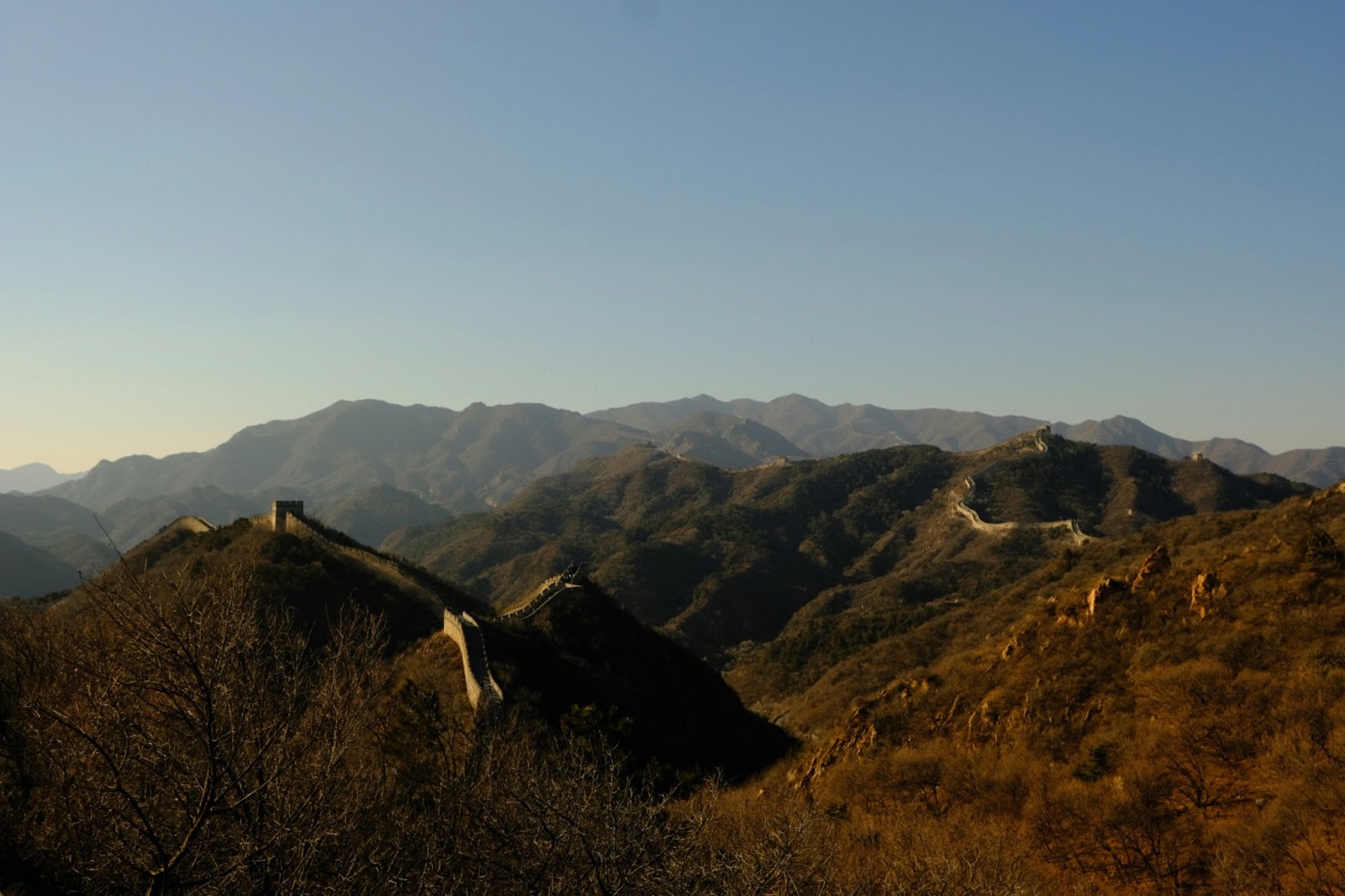
Morning light behaves differently in each place. On the Great Wall, it widens quickly, revealing distance in pale succession — hills folding into one another beyond the parapet. In Kyoto, light arrives filtered through wood and paper, narrowing itself before touching gravel and moss. The scale shifts, but the quiet remains.
Movement through these spaces rarely feels hurried. It feels absorbed.
Where Stone Extends Beyond the Horizon
Walking along the Great Wall, the path rises and descends without warning. Towers interrupt the skyline at irregular intervals. Wind moves freely across exposed ridges, carrying sound away almost immediately.
The journey northward through China often traces routes similar to the Shanghai – Beijing train, where plains widen gradually before tightening toward foothills. From a carriage window, villages surface briefly and dissolve again. The approach to the Wall feels incremental, never theatrical.
Up close, the stone carries uneven warmth. Steps are worn into shallow curves. The path feels continuous even when it disappears behind another crest.
Stillness Within Contained Space
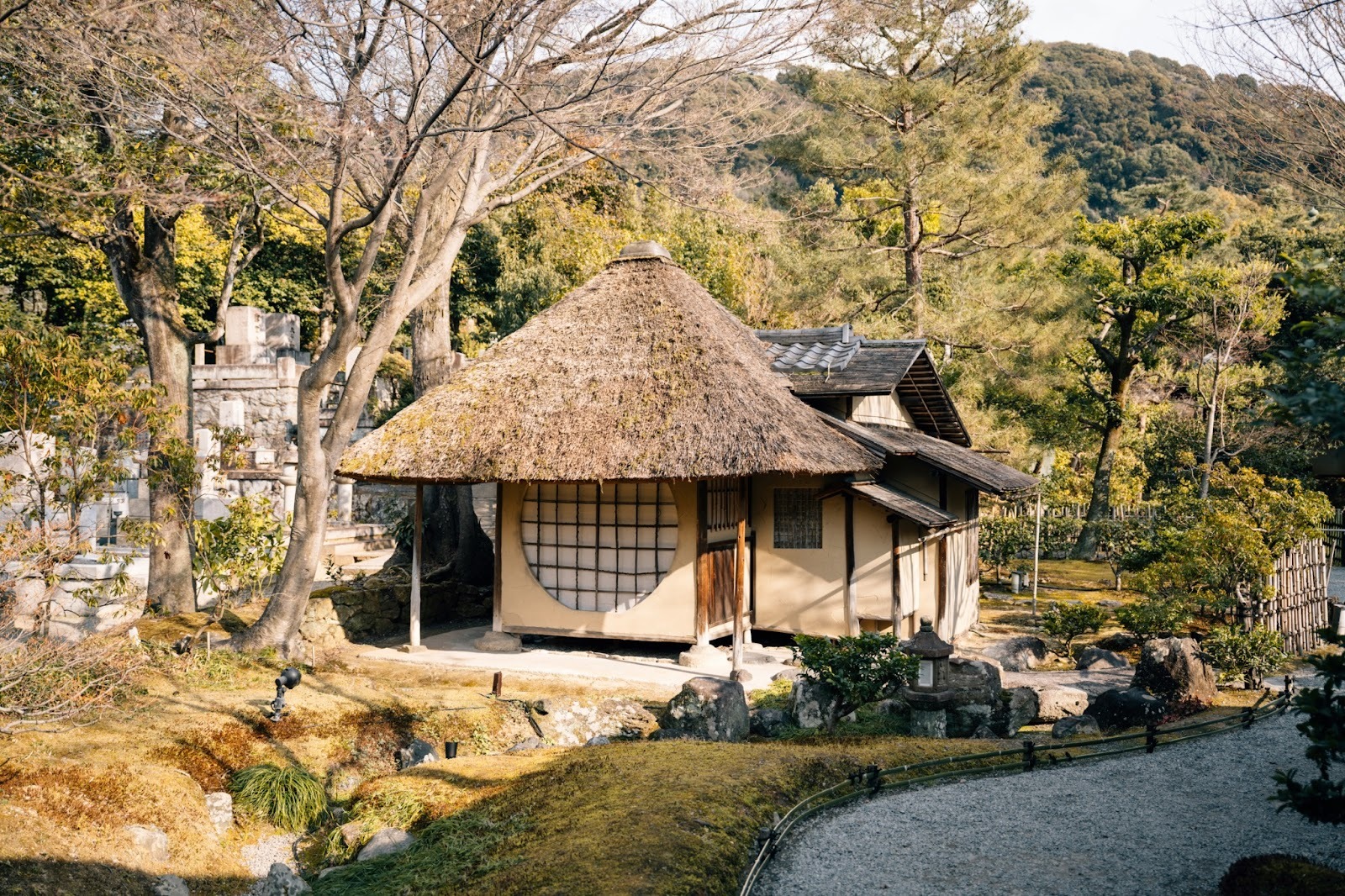
In Kyoto, movement slows almost involuntarily. Gravel remains undisturbed except for deliberate rake lines. Moss thickens at the edges of stone. Silence feels present rather than imposed.
The shift westward within Japan, sometimes along the train from Tokyo to Kyoto, compresses geography without disturbing atmosphere. Fields thin into suburbs. Mountains flatten into distant silhouettes. The transition feels atmospheric rather than symbolic.
Inside a Zen garden, the scale narrows. A handful of rocks occupy a wide field of gravel. Shadows lengthen slowly. The space feels bounded, yet expansive in another sense.
Between Height and Level Ground
The Wall carries elevation. The gardens remain low to the ground. Yet both shape perception through repetition — step after step along battlement, line after line drawn across gravel.
Neither demands interpretation. The Wall does not declare power; the garden does not declare peace. They simply exist within proportion.
Wind across ridge and still air in courtyard feel equally present.
The Path That Continues Beyond Form
Later, recollection blurs distinction. A watchtower silhouette overlaps faintly with the outline of a temple roof. Gravel patterns align briefly with mountain ridges. The rail journeys between cities feel less like separation and more like extension.
What remains is not contrast between dynastic monument and spiritual minimalism, but continuity of stone meeting sky. Texture shifts, scale alters, yet the rhythm persists.
And somewhere between exposed path and enclosed garden, the movement continues quietly — steady, unannounced — carrying weight and stillness within the same measured horizon.
Where Wind and Silence Exchange Places
There are stretches along the Wall where the wind feels constant enough to seem structural, as though it were part of the architecture rather than passing through it. It presses against stone, slips through watchtowers, and then vanishes into distance. In Kyoto, silence performs a similar function. It fills the intervals between footsteps, between the soft scrape of gravel and the closing of a wooden gate.
The difference between movement and stillness becomes less clear over time. Wind carries sound away; silence holds it in suspension. Both shape the experience of stone without altering its form.
The Line Between Scale and Detail
From a distance, the Wall reads as a single gesture across mountains. Up close, it reveals irregular edges, worn steps, subtle shifts in colour. Zen gardens operate in reverse — composed of small elements that collectively suggest something wider than their boundaries. A rock becomes a peak. A ripple in gravel echoes a ridge.
Memory compresses both impressions. Vastness narrows. Intimacy widens. The scale no longer feels fixed, only relative.
A Horizon That Refuses Resolution
Later, the journeys themselves begin to blur into terrain. A train window frame aligns faintly with a parapet edge. The quiet hum of carriage wheels overlaps with the hush of a courtyard. The sensation of forward motion persists even in stillness.
What lingers is not a hierarchy between monument and garden, but a shared steadiness — stone meeting air, ground meeting sky. And somewhere between elevated path and level gravel, the rhythm continues without declaration, stretching outward and inward at once beneath the same unsettled light.
