Light behaves differently across the northern plains. It stretches outward rather than downward, settling low along water and field before thinning into horizon. In Berlin, it rests against glass and stone in muted gradients. In Amsterdam, it fractures across canals in smaller, shifting surfaces.
Neither city feels vertical at first glance. Even where height exists, it rarely dominates. The land remains largely level, the sky disproportionately wide. Movement across this region carries an awareness of openness rather than enclosure.
Water and glass both hold reflection, though in different ways.
Where Transparency Meets Open Sky
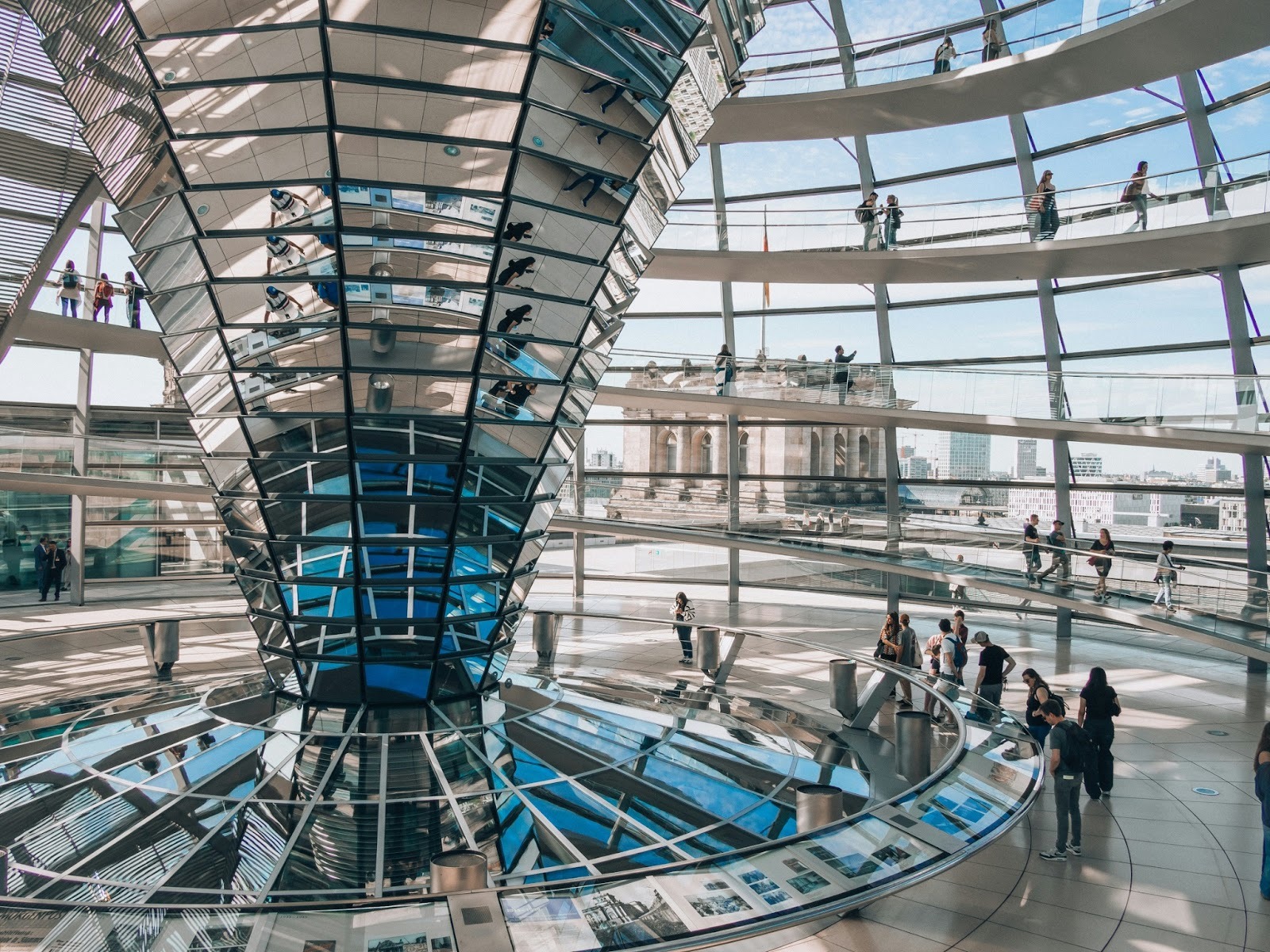
The Reichstag’s glass dome rises without heaviness. Its spiral walkway curves inward and upward, allowing the city to remain visible even while ascending. From within, Berlin appears layered — rooftops, tree lines, distant cranes — all flattened slightly under northern light.
Travelling westward along routes such as the Amsterdam to Berlin train, the terrain rearranges itself in gradual increments. Fields stretch outward in long rectangles. Wind turbines punctuate distance. Towns surface briefly, then dissolve into farmland.
The dome reflects sky rather than enclosing it. Transparency becomes structure rather than ornament.
Water That Refuses Straight Lines
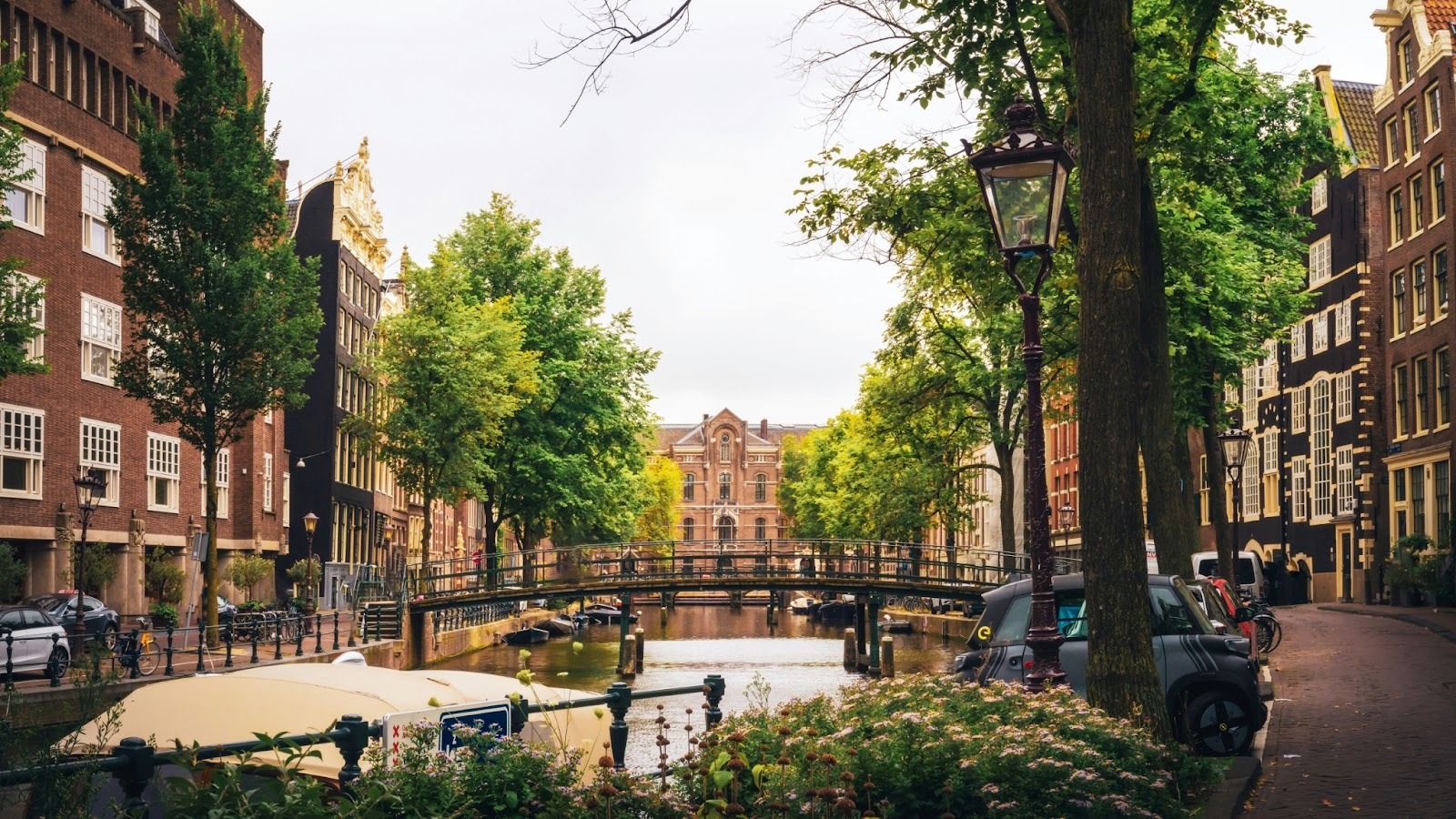
In Amsterdam, the canals circle rather than extend. The Amstel branches and reconnects, framing narrow façades that lean toward the water. Reflections shimmer unevenly, interrupted by passing bicycles or boats.
Journeys continuing south or east sometimes trace routes like the train from Berlin to Prague, where plains tighten toward foothills and river valleys gather in darker folds. Even then, the shift feels incremental.
The canal rings do not feel imposed; they feel adjusted over time. Their curves resist rigidity.
Between Glass and Water
The Reichstag gathers light into reflection. The canals disperse it across surface. Yet both rely on openness — one above, one below. Standing beneath the dome produces awareness of horizon. Walking beside the canal produces awareness of repetition — bridge after bridge, façade after façade.
Neither environment demands spectacle. The dialogue between them unfolds quietly, in mirrored surfaces and steady lines.
The Stretch Across the Plains
Later, recollection softens geography. The glass curve of the dome aligns faintly with the arc of canal water. Fields glimpsed from a train window merge with rows of gabled houses. Distance compresses into tone rather than measure.
What remains is not contrast between capital and canal city, but continuity of openness. Sky holding both equally. Rail lines threading through fields that feel almost uninterrupted.
And somewhere between mirrored dome and moving water, the journey continues steadily — not divided by border or era — simply unfolding across the same broad horizon of the northern plains.
Where Wind Moves Without Obstruction
Across the northern plains, wind rarely encounters resistance. It travels low over farmland, bends grasses in brief succession, then skims canal surfaces without altering their pattern for long. In Berlin, it presses faintly against the dome’s glass panels before dispersing across the city’s rooftops. In Amsterdam, it slips between narrow houses and over bridges, carrying the faint sound of water against stone.
The movement feels consistent even when the architecture changes. Glass registers it through subtle vibration. Water registers it through rippling light. Neither holds it for long.
The Geometry of Repetition
From above the Reichstag, the city spreads outward in measured blocks, streets intersecting in patterns that appear orderly but never rigid. In Amsterdam, repetition appears differently — gabled façades leaning slightly toward one another, bridges arching at regular intervals across concentric rings of water.
The forms differ, yet both rely on rhythm. Lines recur. Curves recur. The horizon remains broad enough to prevent enclosure. Even distance feels horizontal rather than deep.
A Horizon That Stays Level
Later, the memory of specific stations and crossings fades, replaced by an impression of levelness — land that does not rise sharply, water that does not plunge dramatically, sky that remains open from edge to edge. The train windows that once framed fields now seem interchangeable with canal reflections.
What lingers is not monument or bridge alone, but the continuity of surface — glass meeting sky, water meeting quay, rail meeting plain. And somewhere along that steady stretch, the journey carries on quietly, unbroken beneath the same wide, untroubled horizon.
