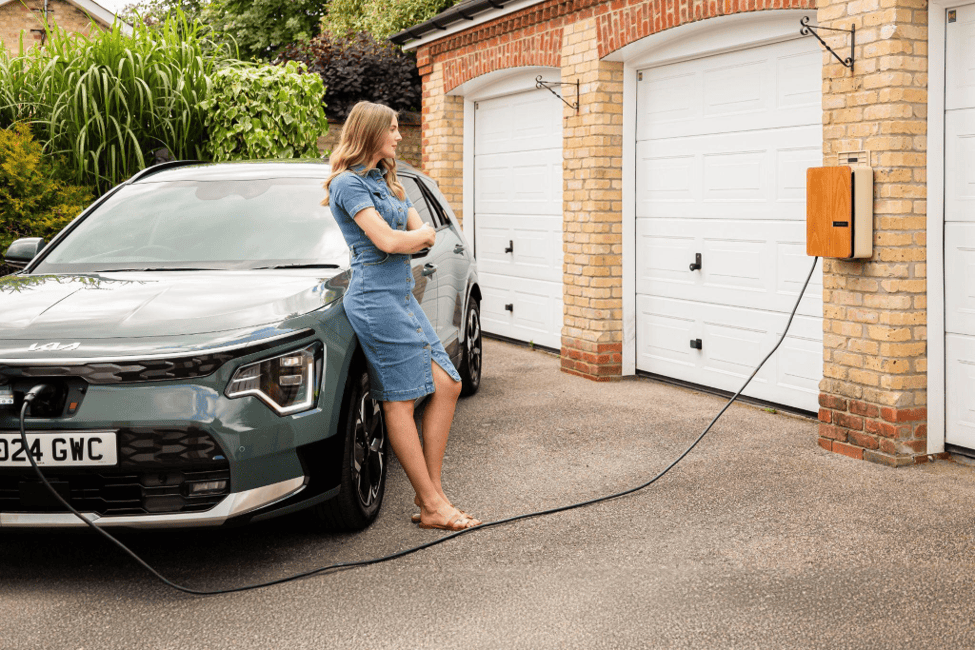
Electric vehicles are turning up in more Australian driveways every month, and once the car actually arrives home, the next question tends to be more practical than exciting: where does the charger go? It sounds like a footnote on a longer to-do list, but get it wrong and you end up with a cable that won’t reach, a unit baking in the western sun all afternoon, or a wall that needs expensive rewiring before anything can even be mounted. Most of the thinking behind installing a home EV charger boils down to four or five practical questions, and you don’t need an electrical licence to work through them before you call someone who does.
Start with where the car actually parks
Before anything else, walk outside and look at where your car sits most nights. Not where you’d like it to sit, or where it parked once when a tradie’s van was blocking the driveway, but where it actually lives day to day. For most homes that’s a garage, a carport, or an open driveway, and each one changes the conversation. A garage gives you four walls, a roof, and an obvious mounting surface, which is why it’s the default choice for a lot of installers. A carport is trickier because it’s covered but not enclosed, so wind-blown rain and dust are still in play even though direct sun mostly isn’t. An open driveway is the hardest case, since the charger either needs a genuinely weatherproof outdoor rating or has to sit on the house wall closest to where the car nose or boot ends up. If your parking habits are inconsistent, that’s worth fixing before the charger goes in, because a unit installed for a car that used to park there but doesn’t anymore is just a very expensive wall decoration.
Distance from the switchboard is the number that decides your budget
Here’s the part a lot of people underestimate. It’s not really about how far the charger is from the car, it’s about how far the mounting point is from your switchboard. Every metre of cable run between the two adds cost, and if the run has to cross a finished ceiling, tuck under eaves, or punch through brick veneer, that cost climbs fast. A charger mounted on the garage wall two metres from the switchboard might be a half-day job. The same charger on a freestanding carport thirty metres away, with a trench needed across the lawn, is a different job entirely, both in price and disruption. This is precisely why a good electrician will ask about your switchboard location before they ask about the car. If you’re renovating or building a new garage, it costs almost nothing to rough in a cable path early and save yourself digging up a driveway later.
Weigh up sun, salt air, and the realities of Australian weather
This is where Australian conditions genuinely change the advice compared with, say, a UK or Canadian guide written for a colder climate. UV exposure here is brutal, and a charger mounted on a north or west-facing wall with no shade will spend years cooking in direct sun, which shortens the life of the plastic housing and the internal electronics faster than the manufacturer’s spec sheet suggests. If you’re anywhere near the coast, salt-laden air is its own slow-motion problem, quietly corroding metal fittings and connectors over a few seasons even when the unit is rated for outdoor use. None of this rules out an outdoor or carport installation, plenty of homes don’t have another sensible option, but it does mean paying attention to the IP rating on the unit and, where possible, choosing a wall with some natural shade or overhang. A garage wins on this front by default, simply because the charger never sees direct weather at all.
Check the cable will actually reach the charging port
It’s a small thing until it isn’t. EV charging cables usually run somewhere between five and eight metres, and the charging port on your car might be at the front, the rear, or on either side depending on the make. Two cars parked in the same garage rarely have their ports lining up conveniently with a charger mounted dead centre on the back wall. Before committing to a mounting spot, it’s worth parking the car exactly where it normally sits and measuring the real distance from a likely wall position to the port, then adding a bit of slack for the cable to hang without dragging on concrete. A charger mounted in the wrong corner turns into a daily hassle of stretching a heavy cable across the floor, which is both annoying and a genuine trip hazard.
Leave room for clearances and for what comes next
Electrical safety clearances around switchboards and power points aren’t just red tape, they exist so a licensed electrician can actually work on the unit later without pulling apart your garage. Beyond that, it’s worth thinking a step ahead. Are you likely to get a second EV in the next few years? Is solar or a home battery on the cards? A charger installed in isolation today can become expensive to relocate or upgrade later if the switchboard capacity, cable sizing, or mounting position wasn’t chosen with a bit of headroom built in.
None of this needs to be solved alone, and there’s no prize for getting it exactly right without help. Once you’ve got a rough sense of where the car parks, how far that spot is from the switchboard, and how much weather exposure the wall gets, a licensed electrician can turn that into a firm plan in about the time it takes to walk the site. Getting the spot right the first time is what makes the difference between a charger you barely notice using and one you quietly resent every single night.
